
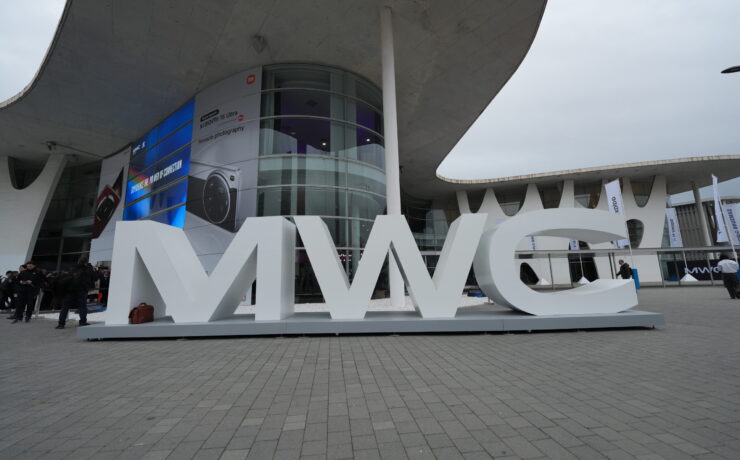
Top Cybersecurity and Tech Side Events to Attend in Barcelona During MWC 2026
Mobile World Congress (MWC) 2026 is back in Barcelona from 2–5 March 2026, celebrating its 20th anniversary as the world’s leading connectivity and tech gathering.
Mobile World Congress (MWC) 2026 is back in Barcelona from 2–5 March 2026, celebrating its 20th anniversary as the world’s leading connectivity and tech gathering.

Phishing and credential theft are not “password problems”. They are workflow problems. Attackers succeed because authentication flows still depend on reusable secrets, human confusion, and

Regulated environments do not adopt authentication methods because they are fashionable. They adopt them because they need controls that are defensible. That means two things

Passwordless authentication is often sold as a clean replacement: remove passwords, add passkeys or security keys, and move on. In enterprise reality, most failures happen

Passwordless authentication is often presented as an inevitable upgrade: remove passwords, reduce phishing, improve UX, and lower support costs. Those outcomes are real. But passwordless

Privileged and admin accounts are the keys to the kingdom. When they fall, the blast radius is not one mailbox or one SaaS account. It

Passwordless authentication is pushing enterprises toward phishing-resistant, public-key-based login. But a second shift is happening in parallel: the standardization of post-quantum cryptography (PQC). The most

Passwordless authentication rarely succeeds as a collection of app-by-app experiments. In most enterprises, it succeeds when it becomes an identity program led through an IdP
Many passwordless deployments quietly assume the same thing: every user has a personal smartphone available at login. In enterprise reality, that assumption fails more often

Passwordless programs often look straightforward on paper: replace a shared secret with cryptographic proof of possession and user intent. In real enterprise environments, the hardest