
No. Biometric data is never stored or transmitted. It is used only transiently on the user’s device to confirm live presence and is discarded immediately after authentication.
Post-quantum authentication at the edge
Edge Biometrics Authentication
Authenticate users through live biometric presence without storing or transmitting biometric data, using post-quantum cryptography derived from images.
The problem with today’s facial biometrics
Facial biometric authentication is widely used, but current models force a structural trade-off between privacy, portability, and security.
Local biometrics, such as Face ID, Touch ID, or passkeys, keep biometric data on the device. This approach is privacy-friendly, but identity becomes tied to a specific device or ecosystem. Changing devices requires re-enrollment, limiting true portability.
Centralized biometrics allow cross-device authentication, but at a high cost. Biometric templates are stored and processed server-side, creating significant security risk, regulatory exposure under GDPR, and long-term liability in the event of a breach.
Edge Biometrics Authentication is designed to eliminate this trade-off.
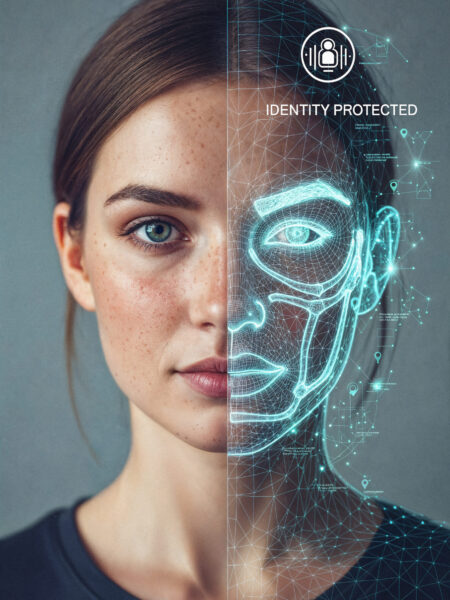
What is Edge Biometrics Authentication?
Edge Biometrics Authentication is an authentication model where biometrics do not store identity data
Biometric signals are used to confirm that the person in the picture is present, while identity is proven separately using post-quantum cryptography.
This model is built on three core principles:
• Cryptography proves identity
• Biometrics verify liveness and image-to-live match
• No biometric data is ever retained
By separating identity from biometric data, authentication becomes portable, privacy-preserving, and resilient by design.
Biometrics verify presence, cryptography proves identity.
How it works
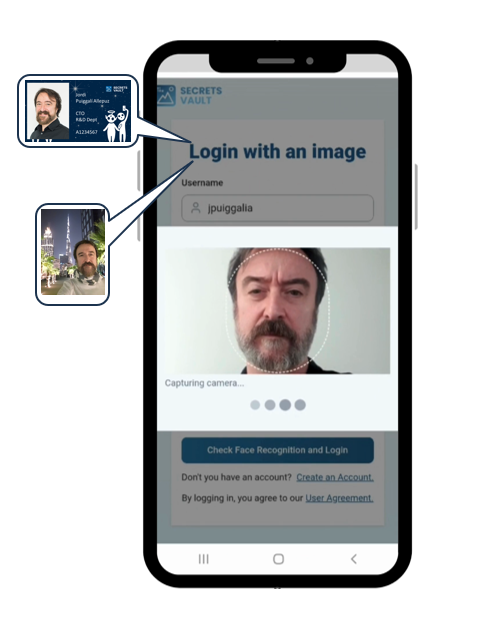
All biometric processing happens locally, in the browser, and ends immediately after authentication

User selects an image
The user selects an image that includes their face for later biometric presence validation.

Live presence verification
The browser activates the camera to confirm liveness and match the person to the image.

Post-quantum key derivation
If verification succeeds, a post-quantum cryptographic key is derived from the image.

Cryptographic authentication
The derived key is used to perform strong authentication against the server.
Want to try Edge Biometrics?
Experience post-quantum authentication with biometric presence verification and zero biometric data storage.
Key advantages

Zero biometric data storage
Biometric data is never stored or transmitted. It exists only transiently in memory and is discarded once authentication is complete.

Post-quantum by design
Authentication keys are derived using cryptographic constructions designed to resist future quantum attacks, without requiring future migration.
Reduced deepfake risk
Facial recognition alone is increasingly vulnerable to AI-generated deepfakes. In this model, a deepfake is insufficient without the image with the user face and a successful live verification.
True device independence
There are no local keys to migrate or synchronize. Users can authenticate from any device by re-deriving the key and completing edge-based verification.
Why enterprises adopt this identity model?
Edge Biometrics Authentication is adopted by enterprises that require strong proof of presence without introducing biometric data risk.
It fits regulated environments, enterprise IAM architectures, and high-assurance access scenarios where privacy, portability, and long-term security matter.
The model can be combined with additional authentication factors or applied selectively, depending on the risk level and access context.
Powered by Secrets Vault Identity
Edge Biometrics Authentication is one of the image-based, post-quantum authentication capabilities available within Secrets Vault Identity.
Explore PQC authentication